Todd Brown (00:05)
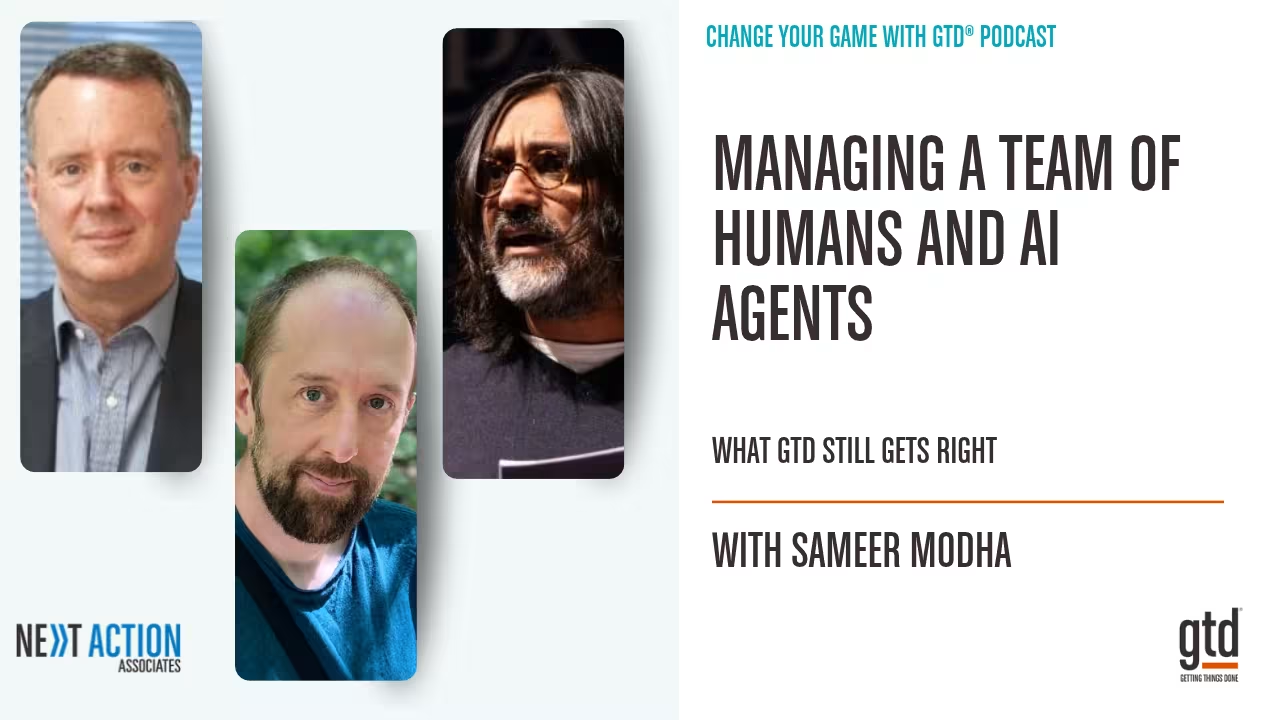
Hello everyone and welcome to another Change Your Game with GTD podcast. My name is Todd Brown, and I'm here as always with Robert Peake.
Robert Peake (00:12)
Hi Todd.
Todd Brown (00:13)
Hey Robert. And we are joined today, I'm very pleased to say, by Sameer Modha Sameer is the measurement and innovation controller at ITV. Sorry, got it wrong. The measurement innovation controller. Did I say that right, Sameer? Only took
Sameer Modha (00:27)
Yeah, let's try it.
Todd Brown (00:28)
me two goes. Okay. Um
And we're very pleased to have you with us here today. Could you give our our listeners just a little bit of background on you, a little bit of kind of what brought you to G T D and what brought you to be here on the podcast with us today?
Sameer Modha (00:42)
Sure. um I should probably start with that weird controller in the title because that's a very broadcast term. So ITV is the, I suppose, the lead commercial broadcaster in the UK. And as a result, a lot of the job titles uh derive from broadcast hierarchy instead of the one that your listeners might be more used to. so, you know, controller is...
one notch below director and it used to refer to kind of controller of programs and that sort of thing. But obviously in this side of the business where I sit in the commercial team who are responsible for ad sales in all its different, different forms. It doesn't really make sense, but it's just a sort of historical carry over that I find quite, quite amusing. Historically I've been in and around media marketing, advertising throughout my career.
uh starting in the creative side, so working for creative agencies, doing ads for anything from Smirnoff vodka to Andrex toilet roll, and then over time working across different disciplines within media marketing, but always on the agency side typically. Until... uh
Gosh, eight, nine years ago, I shifted to work on the publisher side, suppose, if you want to call it that, initially at Google, where I was there for a few years running a data science team and an analyst team in the UK sales org. And then now, a sort of very similar, but also very different role in ITV, helping businesses measure the impact of their advertising. So that's something that's very easy to do.
in
the platform world, but TV has historically not made easy at all. It's always been left as an exercise for the reader. And along in terms of my productivity path within that, I have to be honest and say it's something I've really struggled with all my life. I'm late diagnosed with ADHD on the back of my
children's diagnoses with ADHD and autism. And I had a period, you know, a few years back after that diagnosis, kind of revisiting my entire life through, gosh, that sounds very serious, doesn't it? You know, looking back at my entire life and thinking, oh, so I'm not just stupid and a bit rubbish. There's a reason why some of these things came harder to me. There's a reason why.
I would routinely be triple booked in my diary and I would talk to people in the office and I'd say, yeah, let's go, let's do that. I could do that at half past. And then one of my colleagues would gently point at, Simi, you can't because not only have you already said you'll meet me at half past, but you've also said you're gonna do this other thing, haven't you? Oh, yeah. I'd always be envious of my friends who were very much more ordered in their thinking, it felt like, and they'd sort of.
see logical steps where I would just sort of see interests and go, look over there, there's a goldfish, look over there, what about that? And so within that I suppose I had a number of years of I guess flirting with GTD and other methodologies, nothing ever really sticking. I remember reading the book and getting really quite lost, mean let's be honest it's not...
the most shining bit of prose the universe has ever seen. you know, and it was only really at Google where Harry Davies, I think, previously worked with you, if I remember rightly, at Amazon.
Todd Brown (04:48)
Oh.
Sameer Modha (04:50)
And then you came in to do uh some sort of team-wide coaching. And there was this moment, Todd, I remember when I was really stuck with it. I just couldn't.
hang on so I've got these lists over here I get the action thing and they don't belong you don't need me to record the fact that they belong to a project what wait hang on you what you just just the context bit okay that's and it was this sort of moment of oh okay I get that now and that was that was really really helpful and then and then I've I suppose even since then
had several several goes and each time a bit more has stuck a bit more of the language and now I'm at this point where I really want to be I'm sort of more or less comfortable I fall off the wagon occasionally but I'm more or less comfortable for myself but helping my my team it's a team of seven others in in a wider commercial organization and you know helping them
also be comfortable with getting shared vocabulary, suppose. That's the point where I'm at now, is looking beyond myself to helping those around me.
Todd Brown (06:08)
That's great. Thank you. And and and I do very, very vividly remember that that session. And it's really what what you've described and and a lot of people I suppose out there in the audience may have had this experience. We I think David Allen refers to the refers to them as aha moments, right? Where you sort of get at a deeper level what's going on.
closely related to what David sometimes refers to as a blinding flash of the obvious sometimes, right? Which is which does happen to me even even these days after all of my years of of experience with GTD. Um so so really a really rich picture you painted for us there. Could you tell us a little bit about your um your current team and the work that you do? Just just a little bit about kind of a a sense or two about the uh the the the team's mandate.
Sameer Modha (06:57)
Sure, so we are, what I love about the team is that we sit within the commercial organization. those of you listeners, viewers who uh work with data and know about data teams will probably know that there's perennial debate. Do you hive off all the data people and have them separately within their own organization?
And you can do career ladders within that. You can move people across. You can have guilds for different expertise and develop them that way. But then they're fundamentally in a different tree within the organization. Or you can have them deployed at the edge or forward deployed is the of vogue terminology where they're of data science or analysis at the edge in the organization.
And that has different challenges and you lose some of that coherence maybe of data practice. But what you gain is that sense of being silly about it. It's the same blood in the same mud. And you feel your commercial people feel like you are there with them shoulder to shoulder pushing forward, trying to do things. uh
And that's where we sit. And ITV does also have a centralized insight org. But we sit outside of that because uh our work fundamentally is about connecting advertising exposure data to data on the behaviors that consumers did or didn't do afterwards.
And really, ad effectiveness measurement is no more complicated than that, in essence. But as a data task, your exposure data has to go out and party somehow with data that an advertiser might have or data that some third party might have. And then you have the statistical discipline to bring in on top of that, which is, well, it's usually quite easy to do what people call attribution, which is just measuring the percentage of people who saw the ad.
who went on to do the action to buy the product, visit the website, go to the dealership, download the brochure, whatever it is. And the challenge with that, of course, is that if you're doing any kind of audience selection, then you've sort of, you've baked in the outcome. Because if I'm doing anything, let's say I've used an email database and I'm re-contacting people, well duh, of course a higher percentage of them are going to go on and do the action.
Does that mean that that was successful marketing? No, of course not. So then you introduce the idea of control groups and then you start to kind of industrialize it. And where we are today is that the global platforms have some of the most amazing, from a data science point view, some of the most amazing machine learning models on the planet. Those models know more than any, well, frankly, than every human together has ever known.
about the influence of media and advertising on consumer behavior. um But those models don't necessarily share that learning with the humans. And the only way you can access them if you're paying Google or paying Meta is to keep putting money in the slot. And you get a return. they are brilliant products. One of the weird things about my job is that people expect me to be kind of anti-platform. And I'm not, because they are great products. And they do return value to advertisers.
The challenge for TV has been that its value has historically been much harder to measure. And so our job is to take a lot of those modern techniques and find ways of applying them within the economics of our business. that's where, coming back to my point about being forward deployed, that's where being in the sales org really matters because my team are going to those meetings with advertisers and we're trying out new stuff and say, okay, does this work for you? Does this help you?
have your conversation with finance about justifying your budget for next year? No, it doesn't. But could you do it like this? Oh, could we? I don't know. Let's think. Yes, we could actually. All right. What about this? Does this chart help? Yeah, that really helps. OK, good. And so by iterating and testing live in the context of that, that works really well. The challenge is we therefore have to be, to kind of finally answer your question, we have to be quite a multi-skilled team.
um
And so the setup is that not only do we have five data scientists, we have our own project manager. We also have our own uh senior legal advisor who is a part of the team and sits with us, works side by side with us. Because a lot of our work is deal making to go and get deals with people who hold outcome data, figure out ways of connecting that safely.
and in a manner that is respectful of privacy to the exposure data. And all of that is fundamentally legal commercial work at this kind of very technical axis. so interlocking all of that, about 18 months ago, our finance lead for commercial said, what will help you go faster? And I knew exactly what it was, which was our own lawyer. If we had a lawyer that sat with us, who was deeply...
engaged in all the technical aspects and could work alongside us. That would be amazing. So, so we're quite a heterogeneous team, quite a small team, very widely connected within the org. So, you know, we've had to persuade the wider tech org that we're not vandals and Visigoths, so we're not going to trash the technical ecosystem.
And that, I mean, that took several years by itself before they
Robert Peake (13:10)
Mm-hmm. uh
Todd Brown (13:10)
Yeah.
Sameer Modha (13:11)
finally trust us and go, okay, they're not insane. They can run their own budget.
They can have decent permissions for our technology and we can trust them not to do something horrible. You know, the legal team has had to learn to trust us. There's all these different bits of the organization that we've piped into. So we are, I mean, it's a horrible, horrible cliche, but we're sort of a little measurement startup grafted onto a large broadcaster. If you couldn't tell already, I love it.
It's a great, it's bet. I there are highs and lows. It's an emotional
Todd Brown (13:49)
Yeah.
Sameer Modha (13:49)
roller coaster. know, when you bump up against something that's, oh, you're to have to go to some committee meeting with 75 technologists and they're going to ask you all these questions. You go, oh, really? This is just a prototype. If it doesn't work, I've wasted all of their time. Can we find some other way, maybe? Do you think? mean, there's lows, but there's also generally, it's just, it's great fun.
Robert Peake (14:15)
Yeah, yeah. Well, you've, yeah, so you've proven to the wider org that you're not evil geniuses, but, you know, having done a bit of work with your team, definitely it's a small but mighty crew, very smart people. And interestingly, one of the things we were talking about kind of before we pushed the big red button here uh is that that small but mighty team has gotten considerably, potentially mightier with the introduction of a big new.
from left field kind of variable, which is AI. So um yeah, we were talking a bit about the challenges that brings, the opportunities that brings, and also what do you do from a GTD standpoint as someone who's not only now a solid practitioner, but who wants to inculcate some of that with the wider team, when now in a sense, your team also includes a bunch of bots.
So
I think we can talk a little bit about what you're experiencing there as well.
Sameer Modha (15:16)
Yeah, no, absolutely.
it is.
really hard. ah I wish I had some kind of answers to offer but I think maybe what I can do is outline what it feels like and uh where I see the challenges, you know, and where some of your listeners will have been on exactly the same journey, you know, starting probably last November.
and coming to some of these tools and thinking, wow, they can do all this and actually reliably and thoughtfully. And not only can I use these tools for coding work, but actually code is just text, knowledge work is largely just text, the occasional picture thrown in if you're feeling generous. um And they just chew through that kind of work as well. So I had this period from November through to probably a couple of months ago.
where I was just trying to learn how to drive this machinery for myself and how to, I suppose, or put it another way, how to engage with a different emerging intelligence. And that might sound a bit highfalutin, but I think that is where we're headed. We're now heading towards a world where there will be this other form of intelligence that is...
present around us in different ways. And you think about how we went from computers that were quite primitive to computers that were super fast and friendly. That similar order of transition we're just at the beginning of. know, Ethan Molyke, uh I can't remember which university he's professor at, but you know, he talks a lot about these, these are the worst they will ever be. And the curve is still exponential and it's still, so there's this sort of emerging intelligence that is changing weekly.
But it's also an intelligence with very different characteristics to ours. And also some that are very similar. So there's this paper from Anthropic about the emotional concept vector activations in models, which is their formal polite way of saying these things have feelings. And people are going, don't be ridiculous. They can't. Well, of course they do, because they're trained on all of human text. And all of human text has quite a lot of emotion in it. It's not as if all debates on Reddit are conducted in a calm, peaceful.
mode. And so there are these things and then we give them instructions and we make them very shouty and there's a big tradition of you know make no mistakes, capital letters, mandatory, do this, do that. Now if you were to talk to a human like that you'd freak them out and they'd be really you know their heart rate would go up and they of course they make more mistakes and funnily enough the machines make more mistakes when we do that to them. So you know engaging with this different form of intelligence that is also episodic and amnesiac.
and fundamentally not like humans in that there's nothing other than what you build in, there's nothing that carries over from conversation to conversation. it's a little bit, I worry about this comparison slightly, but some people I know have had the experience of relatives who have had a shift in their kind of mental capacity and you can have a lucid conversation with them.
but then the next time you meet them, there's no memory of that previous conversation. And I hope that doesn't feel inappropriate as an analogy, but it is a bit like that. And so the connective tissue that links those conversations together that you build has to be quite different. so, you know, coming back to that moment, Todd, of me realizing, oh, you can decouple the next action from the project when you can for a human.
because the human has that, em to use one of Claude's favorite words, a substrate that links the sessions, but the machines don't unless you build it in. And so even those really fundamental, mean, one of the first things that people do when they really get into this is they build some sort of task tracking system for their machines, for their ops, whatever
Robert Peake (19:39)
Mm-hmm.
Sameer Modha (19:41)
you want call it. And I've built one that I...
quite like and actually interestingly, actually this is sorry, which is led with this. I started with a thing from a chap called Steve Yegg, who made a thing called Beads. And Beads was a sort of agent friendly method of task tracking and the agents could write the tasks and then read them back. And then Steve went off in this kind of crazy direction. It's very interesting, but very different from what I wanted. So I wrote my own.
And then I found what I needed within that was, funnily enough, a form of GTD practice. So the way that these things are structured is each one has a desired outcome and then it also has three sections and the sections are mandatory for the agent but in a very gently enforced way. And it has to say, you what the desired outcome is, how it's going to get to that and why it matters.
And so constantly the agents are writing these tickets for themselves. And then when they read them back, they have an ability to kind of rehydrate, if you like, understanding and then to work through a plan. then I built a planning method on top of that, which then strings these things together in a kind of narrative arc and so on. And so that it's legible to the machine. But where I am now, I suppose, is that works for me and works for agents that I'm
bringing into being, but it doesn't work for the team. So I've given that tool to them so they can work individually with all their agents. But then you get to where we need shared skills. We
Robert Peake (21:20)
Mm-hmm.
Sameer Modha (21:20)
need shared tooling. How are we going to do that? then how do we have a uh board, back to your themes of visualizing the work, we have a board that works for all of us, all us humans.
And we look at that together and we can reason about our areas of focus. We can reason about the sort of desired outcomes that we're working towards, which of those are the most important. We then draw a line and say, okay, the next action is under that. They sit with you. That's not something we're going to review together because it shouldn't be. But then how do we keep that separate from the machine system? Do my machines tasks
next actions need to be legible by machines driven by one of my colleagues. How that I mean that's where we are now and I don't have any answers but I do think it raises some questions.
Sameer Modha (22:21)
it it means that you have to I think that we have to revisit some of the fundamentals because what's true for the human isn't true for the machine. And and now, you know, I hesitate saying that because, you know, you you you are both veterans of this. You have had people coming to you over and over again saying, we need
We need tooling for this. We need a cis we need a software system. And you know, you you you quite rightly say in your training, actually, no, you don't. There's a reason that we don't commit to there's reason we're not some kind of SAS vendor. Uh, because we don't need to be. It's the essence of the system that matters, and you can run it off six or seven sheets of paper. And that's that's fine. In fact, the danger is, particularly for tech.
Technology-enabled teams and and even more so for agent-enabled teams is to try and build it all into the software, which then can easily become brittle, easily become illegible, and you start to lose lose control and lose clarity. So I hesitate to say
machines are different and so we need to we need to restore for example the link between project and next action but that's that's almost where we are and what I want to experiment with is to figure out okay do what what I suppose in my my approach is going to be what are the least possible changes that we can make such that we can accommodate the machines without losing
The human legibility. And then how do we relate to that? How do we you know one of the first skills I wrote was a GTD skill. And I took all of the stuff that you've shared in the past. I took some of my own thoughts. I said, Okay, look, take all of this, synthesize it, and then help me.
so now, you know, I have a machine that knows about me, knows about the ADHD, and knows about GTD
Robert Peake (24:32)
Yeah.
Sameer Modha (24:32)
and will will apply that discipline back to me. So maybe the other part of this, the more intimate part, kind of looking inwards to my own practice rather than outwards to the team who who I still feel like I need to help more, is
y y you can build not not a brittle kind of code-based system, but you can build in support from the agents to an individual that will help that individual uh be truer to their own higher desires. Gosh, that sounds really pompous, doesn't it? Um
But be be j know, it it it helps me be more of what I want to be. Um and that has come through explaining to it what matters to me. I I'm I'm always surprised, actually, maybe this is a good point to sort of conclude with. It I'm I'm always surprised at how many people have not taken the time to write configuration files, claude.mds agent.mds, or whatever you wanna whatever they are.
To their agents that tell them about themselves as people. You know, there's lots of engineers out there who write, well, you can only use these libraries and only use these sorts of functions, and you must always have variables in kebab case, and you must never do this. And there's lots of finicky detail about how to write software. But what I've found really useful is: this is me, this is what I'm good at, this is what I'm bad at, this is how I like to work.
This is what I struggle with. This is where I need your help. And we do that with with humans. I mean, I have a process with my team where we have manuals of me, and everybody writes a manual of me. It just hit me the other day that the manual of me is a human form of a claude.md. So there's another convergence happening there.
And I I'm I'm right look, I I'm
Robert Peake (26:40)
Thank you.
Sameer Modha (26:41)
I I I I feel bad that I'm not being crisper about this and being clearer about okay, this is this is what we're doing and here's a lovely solution for you all. But all I can do is be honest about I'm in the middle of this thing, like a lot of people are. I'm wrestling with it. It's it's intriguing and tricky but definitely needs doing.
Todd Brown (27:02)
Do know, Sumir, the more you're talking about this, the more I'm I'm you're you're helping me to sort of time travel a little bit. And I remember that Robert and I did a podcast, it's probably a year and a half ago, where we were talking about one of the limiting factors as we saw it of AI at that time, was that I think the phrase that we used was AI doesn't know us, right?
So this was back in the day when primarily what you were talking about was, yeah, well, AI is, Robert, I think you've used this phrase, AI is like having a friend who's memorized the internet, right? But at the same time, it didn't know us. So this was pre Copilot you know, didn't didn't know our emails, didn't have access to the information that was in, you know, whatever the the the graph. and I think what you're what you're um sort of adding to the richness that of the picture here.
is the fact that we're getting to the point where not only does AI know us better because of the artifacts that we've created, right, or have stored, you know, things like emails, etc., but also because we have we're we're understanding better the importance of the kind of work that you're talking about, which is fill it in, right? Help as in fill the AI in. uh
Wha who am I? What am I as you say, what am I good at? What am I not so good at? And that's that's adding to well, it's adding to the richness of the conversation, I suppose, in a sense, and also at the same time, it's also adding to the effectiveness with which we can interact, right, with all of these with all of these tools.
Robert Peake (28:35)
Sameer, I think you're in an interesting um but not at all unique situation in that I think you're someone very attuned to having a heterogeneous team with people whose minds all work differently by definition of being human.
but you're aware of that and wanting to support each individual in doing their best. And now AI agents, you're also very attuned to the fact that they work and think as it were differently as well. So how do you bring all of that together? one of the over, so, and how do you bring all that together in a way that as you said is not brittle because it's locked into a particular tool that Anthropic's gonna reinvent in a few months from now and or we're gonna find out
It doesn't work for one person, becomes a weakest link situation and disintegrates or whatever. So what are the high level principles that help you navigate that situation of fundamentally collaboration? Collaboration among capable, specialized individuals that need to function together more like an organism. And for me in GTD terms, two that really stand out.
um are the conscious externalization of work and the outcome clarification and alignment around clarified outcomes. I think those two, the more I start to think about how that applies to AI and how that applies to people and how people and AI need to have those two things really working well together in order to enable the person to achieve what they've set out to do with their
their intentionality and their desire for things, which AI doesn't have, except a desire to give you the right answer, which can be rather annoying or helpful, depending. m So to me, so much of it revolves around that, of, know, do we have clear outcomes? You know, and when we talk about, for example, teaching AI how to help you, how to be a good collaborator, I think of the horizons of focus.
It's like, well, what are your vision? What are your goals? What are your ongoing areas of focus? Getting all of those things drawn out. It's been hugely helpful in creating more of a true co-working partner for me out of AI. And then the part about outcome clarification and the kind of, for me, almost sort of ruthless revisiting of the outcome to ensure that I'm not drifting from my aims into seeding a bit of what we're now calling, you know,
cognitive sovereignty, right, over to what can be a self-reinforcing loop of the machine going off on a bit of an inappropriate tangent. So that's, I mean, that's a very high level, but that's kind of where I go and where I start to think is through those lenses of, we getting it out so that we can look at it together? And are we getting clear together about what we
Sameer Modha (31:39)
Yeah.
Robert Peake (31:39)
want and where we're headed?
Sameer Modha (31:42)
And that I think that yeah, that makes that makes a lot of sense. Uh it's and it's all it's hard because suddenly a team of eight is actually a team of eighty.
and a team of eighty without a you know without a clear organogram. And so it's not it's not as if and I you know I I you you I've I've I've never I don't understand how how GTD kind of works in a, you know, an eighty person team. That's something I've never had to think about. I've always had, you know, two pizza teams
They're very relatively straightforward to manage, it you make it visible, it's it's quite a tidy problem relative to what we're now facing, which is uh how how do we do this where okay, each person has the sort of force of ten, but then some of those ten are shared, potentially, because they're seeing a shared system, and some of those are individual. So is is it is it that I'm managing eight managers?
each of whom is managing a a workforce? Or is it more fluid than that? And how do we you know, so I've I've got a lovely set of tools and systems that work for me and I've then donated those to the rest of the team as as kind of i an individual level operating system if you like. Um but where we are now is uh
shifting from that to okay, well we need some some shared skills, some shared tooling, and a little bit of maybe the engineering discipline about that in terms of thinking, well, someone needs to be the editor in chief of that skill and deciding what's in and what's out and how we make it better over time. And so you lose a bit of the fluidity there. And then as you say, the the visualization piece, the externalization of the work, that's that's the bit that I'm I d I can't
yet see where to go. So at the moment, I mean just to share what I'm struggling with, I periodically have a moment where I go, oh, there's so many strands, I can't hold them all in my head just with the different because actually sorry before I say that, what another thing that I think is interesting is that the the folder becomes the agent. So as soon as you start organizing your
Or knowledge into folders of some kind. An agent invoked in the folder in the same way that an agent invoked in a node of a code base becomes an expert in what it can see around it. It's like there's a room of knowledge, but all it has is a small lamp, and you light up a corner of that room, and you'd better make sure that the room is organized in such a way that when you light up a corner of the room, the agent has enough grasp that it can help you.
And and so in in that situation you then have to think about you know, the the bit of I'd be honest with you, the bit of GTT that I still totally do not understand is the bit about the the information store for the future. And I'm I'm mostly reliant on search and and a you know, a bit of memory.
But now there are these agents that can search me, and so I've built a system which is reorganizing into a set of folders such that if I start up in a folder that is about that topic, it's instantly primed on that topic. And that works for me as an individual.
And that's great. But then again, you know, the thing that I have I have always avoided, and I've always annoyed my teams by avoiding, is any kind of hierarchical fold or organization of knowledge. Because again, brittleness and rot and decay. And yet now, if you've got tireless workers who can be going in overnight and just restoring everything to clarity, like the the goblins and the shoemaker story.
You know, and then in the morning there's some shoes. That that's where we can get to. And I I get lost in the midst of all of this sometimes and I I have to then stop and I run a process where I say, Okay, Claude, in my case, I'm lost.
Todd Brown (36:03)
Mm-hmm.
Sameer Modha (36:04)
I there are all these different strands across all these different bits of software and knowledge.
Can you go back through them and help me zoom out again to get to a kind of higher level picture? And I I I'm periodically doing that at the moment. And that is a I suppose it's like a weekly review with machines.
Robert Peake (36:26)
Mm-hmm.
Sameer Modha (36:27)
And there's
Todd Brown (36:28)
Mm-hmm.
Sameer Modha (36:28)
Part of that that's quite nice, and I've I've only just framed it in that way, and that's sort of, okay, maybe it's not such a bad thing to be doing, but it's very much an individual thing to be doing. So the thing that I'm wrestling with is what stays individual.
You know, you're very clear about the water, the waterline is next actions are yours. And yes, there might be a waiting for because you're tracking someone else's, or there's a delegated, but then above the waterline is the projects, and there might be delegated projects and things like that. And it's above the waterline that you manage collectively as a team.
Robert Peake (37:00)
Mm-hmm.
Mm-hmm.
Sameer Modha (37:01)
And I think that's probably still true in this machine world, but how we implement that.
For machines whose notion of legibility is very different to a human's is an open question. And in all of the tooling that I build, just software-wise, one of my principles is it has to be as easy for the human to read as the machine and vice versa. And I think that's probably going to have something to do with it. But it's not easy.
So I'm I'm I'm hoping that you'll figure it out and then you can tell me. Or maybe we'll we'll have some experiments together, but there you go.
Robert Peake (37:44)
Indeed,
Yeah. Todd, what is that spark for you?
Todd Brown (37:50)
Yeah, I just think it's I uh I wanna just say thank you, Sameer, for I mean, what what I've what I've really enjoyed about what you've shared with us today is that you're not saying, yeah, I've got all this sorted. Because yeah, you know, I'm I'm I'm in the middle of it. I'm in the thick of it. And and you've made a lot of progress, right? So I'm I'm sure an awful lot of people will be saying, Well, there's a there's a it sounds like you've trodden a really interesting path there to get where you are and you're seeing benefit, but where it's all quite gonna settle.
Not quite sure. And so many people, I'm sure, who are listening to this are asking the same questions or or you know experiencing the same sort of things. I think, you know, what's what's interesting for me is that there's a, you know, w one of the things that I think you've you've brought up a few times is this is this um somewhat uh this this gray area around responsibilities, right? This kind of like who's doing what question, right, ultimately.
And one of the things that we're seeing
You know, one of the really gratifying things about the work that we're doing these days is how relevant GTD is in this current world, right? So it brings these frameworks, it sort of offers these frameworks up, and we go, wow, in in in an agent in an agentic world, those are really helpful things, right? So uh GTD obviously was not developed with with AI in mind, but it turns out it's hugely, hugely relevant. Anyway, long story short, I think one of the interesting uh questions for me is as
We
expand what we do in the agentic world, do we end up with um, you know, do we end up spending more time on what we would call sort of areas of focus, right? So, in other words, do we say, okay, well, you know, the the you you as an individual here your areas of focus, right, within our team. And then that individual can say, Great, and now I can sort of, in essence, end up with delegated areas of focus to the various agents that I have.
working for me, right? The the agents that I'm that I'm managing. And so um yeah that's again I don't have a yeah that's absolutely you know that's absolutely something I have gobs of experience of but early returns I'd say are positive in that direction, right? And and and it brings the kind of, you know, we go back to one of the GTD 101 principles, which is that a good system has clean edges, right? And and good ways of working have clean edges. So if you can say yeah this agent is responsible
For this. And it might be that the agent is really just working on an outcome, as you've described before, is working on an outcome for you. But it might be that it's something that's a little bit broader than that, and that this is something that you're going to you're going to continue to work on that with that agent in this particular area of focus. Don't know, but that seems to be, you know, quite quite promising if I'm trying to bring clarity.
to the you know to the to the world that that that you know I'm not using your word, but but the sense that I got was that that bit of your world is feeling a little bit um a little nebulous at the moment.
Sameer Modha (40:55)
Yeah, it i it that's that's exactly
it. It's feeling like edges that were reasonably clear in terms of my my day-to-day practice are are are fuzzy fuzz fuzzier than they've been for a while and and I don't I don't yet know. I'm sort of feeling my way towards different ways of of drawing and defining them to get to get more clarity.
And you know, it's it's this then it's this thing of, you know, how much of that is just going to be for me as a unit with with my agents versus someone else on the team with theirs, versus what is what is sort of a collective across the agents. And that and that's the bit that yeah, I don't I really don't don't have any any answers on. I mean I the the tools that I've built so far, I mean
I guess in the time honored tradition of podcasts, you know, you can you can put a link in the show notes. Um but you know that that I'm I'm happy to share those such as they are. And
Robert Peake (41:57)
Okay.
Sameer Modha (42:00)
and you know, anyone who pokes in them will will immediately see the kind of GTD fingerprint. but they're very far from being being a kind of complete, complete answer. They're sort of, you know, visualize bits and externalized bits. Um
But I do I do I think on the whole I feel optimistic rather than pessimistic. I mean it it would be easy to conclude from this podcast that maybe it's all a bit a bit scary and a bit gloomy but but i I don't think it is. Um but the principles and which ones apply
for the humans versus the machines, what that means when we all work together, what that means in terms of the organ as you say, I mean actually spookily and completely organically, the folder structure that I'm now evolving has ended up looking remarkably like my areas of focus.
And so suddenly, ah, okay, that's uh that's a that's a pattern that I know. Good. And so if I'm if I'm working within this area of focus, I go down to here, I fire up an agent there in the tree, and it instantly knows whatever I know, and also more than I know because I'm a bit forgetful, and brings that back to me. So, there was this thing, what about that? And that is that relevant here, and so on. And and so, yeah, I think there are glimpses of of a kind of future.
future pattern. And I you know, maybe we'll come back in a year and and talk about how we've resolved it all and and and hear some sort of more more definite patterns um that we can share. But uh yeah, it's gonna be a fun journey.
Robert Peake (43:45)
For
me, the beacon of hope that GTD provides on kind of all of this is not, you know, very specific and prescribed solutions to everything we're talking about right now. But certainly we're discovering uh that that which we've made in our own image, what do you know, responds the way that we do. And so GTD having been built on really sound.
principles about how we respond, how we think, how we think better. Those principles apply so effectively and well, right? We discovered in the emotion concepts paper, my gosh, this thing has an amygdala, it doesn't like being shouted at. You know, we actually need to create psychological safety for agents now. But guess what? They also need really good delegation practices in order to be able to fulfill your requests. They also respond really well to.
having the context that you would give them in a particular area of focus. all of these things, that's the wonderful part, all of these things we've discovered about individual and team effectiveness within a human context, we're now looking to, again, this thing we've made in our own image, and realizing, wow, so much of it can apply there as well. So we may not have all the tooling, all the answers that account for some of the difference.
and an awful lot, surprising lot of the similarity yet. But I think we have the principles, the fundamental principles and just being aware of, you know, are we achieving the clear outcomes we want to with these agents supporting us? Are they able to do their best work? How do we think about that? Is going to evolve us very much into a position of being able to optimize.
the team effectiveness, the new team effectiveness that includes, as you say, this other form of intelligence. So I don't think we have to have it wrapped up in a bow right now, but I sure am glad that we've done this level of thinking and understanding about the systems and rituals that support people in teams doing their best work. Because now we have something that really seems to respond beautifully and well to all of those best practices.
Todd Brown (46:01)
Wonderful. Gentlemen, I'm sadly gonna bring this to a close. That has been incredibly rich. So, Sameer, thank you so much. Thank you for joining us. Thank you for being, you know, for being as as frank and honest and vulnerable and inspiring and all of the things that you've been in the last little while. Really, really appreciate your uh your taking part in this and and and being part of it for us.
Sameer Modha (46:23)
My pleasure. Thank you for having me.
Todd Brown (46:26)
and for all of those of you out there, please do like and subscribe as usual if you want to hear more from us. and you know we also as we like to say do take requests. So if you have any uh topics that you'd like to hear us talk about, please do let us know. We would be very happy to consider those as we do the planning for our future podcasts. But for now, for myself, for Robert, for Sameer, thank you very much for joining you for joining us and we'll see you next time. Bye for now.


Subscribe to our newsletter
Want to receive tips on how to live a more productive and stress-free life?